


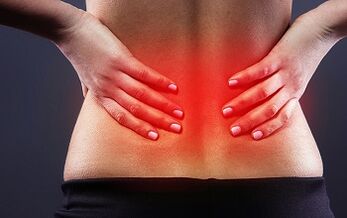
It is difficult to imagine a person over the age of 30 who has not experienced discomfort and pain in the lower back.The increased amount of life time spent in a sitting position, in addition to physical inactivity, "gives" us problems with the spine.It is good when the pain is isolated, short-term and passes quickly without leaving a trace.It is worse when the pain is increasing, unbearable, and does not go away for a long time.This signal should be taken seriously.Often this is a signal from the body that it is experiencing a serious illness that requires attention, effort and even financial expenses.
To prevent the development of such events, you need to know about the factors and causes of the disease that can trigger the development of such pain.
We hope that our popular articles will help you avoid the development of serious events for your lower back and help you maintain your ability to work for a long time.
Risk factors for low back pain
If you feel pain in the lumbar region, then you may expose this part of the body to one or more of the following factors:
- Lack of physical activity for a long time;
- Excessive physical activity after a long rest;
- Prolonged sedentary work;
- Errors in nutrition;
- Long-term static and monotonous load on the spine, vibration;
- Lift weights;
- Professional sports (wrestling, boxing, weightlifting);
- Smoking and alcohol.
Any of these factors can be removed or their influence can be significantly reduced, which will give you the opportunity to avoid the development of chronic low back pain.
Causes of back pain
The causes of lower back pain are usually divided into secondary and primary.
The main cause of back pain
In fact, they are pathological processes that have been determined by musculoskeletal changes.In lower back pain practice, it is more common than secondary causes of lower back pain.As a rule, the main cause is understood as one of several degenerative-dystrophic processes:
- osteochondrosis,caused by the development of dystrophic changes in the bone and cartilage structure of the lumbar spine.Sometimes the process affects both intervertebral discs and adjacent vertebrae;
- Spondyloarthrosis.This pathology affects the joints responsible for the mobility of the spinal column in the lumbar region.
Secondary causes of back pain

- Deterioration of the condition of the bone structure due to metabolic disorders of the lumbar spine (osteoporosis and so on);
- Oncological processes in the vertebral or paravertebral space.Often, low back pain can cause distant metastases;
- Curvature of the spine;
- Infectious lesions of the body (tuberculosis, brucellosis);
- Inflammatory processes of a non-infectious nature (rheumatoid arthritis, Reiter's syndrome);
- Traumatic lesions of the vertebrae in the lumbar region, including fractures;
- Stomach and intestinal diseases;
- Diseases of organs and systems in the pelvis (renal colic, sexually transmitted infections, adnexitis, ureaplasmosis);
- Stroke disorders of spinal circulation.
Causes of chronic and acute low back pain
Back pain in the lumbar region can be acute and chronic.These two factors should be distinguished, because the presence of one or the other will determine the treatment tactics for the underlying disease.In some cases, this can also stop the development of complications and chronicity of the disease (its transition to a chronic form).
Causes of chronic back pain
- Bechterew's disease (ankylosing spondylitis);
- Spondylosis deformans.Often the symptoms are a dull ache;
- Tumors and their metastases.Carrying out differential diagnostics to exclude oncological processes from the list of causes that cause chronic lower back pain is carried out with the exception of lymphoma, multiple myeloma, body cancer lesions of various localization;
- Oncological formation of the spinal cord (located both directly in the spinal cord and in the space between the dura mater and the spinal cord);
- Osteomyelitis.Often the symptom is a disturbing pain in the lumbar region;
- In addition, a tuberculin test can be prescribed to exclude the causative agent of tuberculosis in the patient (exclusion of spinal tuberculosis).
To clarify the diagnosis, additional studies can be carried out in the form of radiography, myelography, and biopsy.
Causes of acute low back pain
- Tearing or stretching of muscle mass along the lumbar spine;
- Spine fracture;
- Intervertebral disc displacement;
- Facet syndrome (damage to the nerve root in a place where it is not anatomically protected by the bony structure of the spine);
- Epidural abscess;
- Coxarthrosis (a rare pathology characterized by severe pain).Therefore, coxarathrosis does not cause back pain, but it causes unbearable pain that radiates to the legs.
Lower back pain treatment

The appearance of lower back pain, regardless of its location or intensity, should be a reason to seek qualified medical help.The high intensity of the pain syndrome should be a reason to call the doctor at home or get an ambulance.
The best solution is to conduct a course of treatment in a hospital environment.
Lower back pain can have various causes, often not related to damage to the spine, and therefore, to distinguish the cause, you may need the help of specialists such as:
- gynecologist;
- gastroenterologist;
- infectious disease specialist;
- pulmonologist;
- urologist;
- nephrologist;
- cardiologist and proctologist.
It is important to remember that getting advice from a professional doctor as soon as possible will help you avoid complications.You can not self-medicate, and use folk remedies for pain in the lumbar spine only on the recommendation of a surgeon, orthopedist or vertebrologist.